

AFP, Tehran
World leaders on Tuesday piled pressure on Tehran to stick to diplomacy to bring an end to the Middle East war, after a salvo of attacks in the region left a ceasefire crumbling.
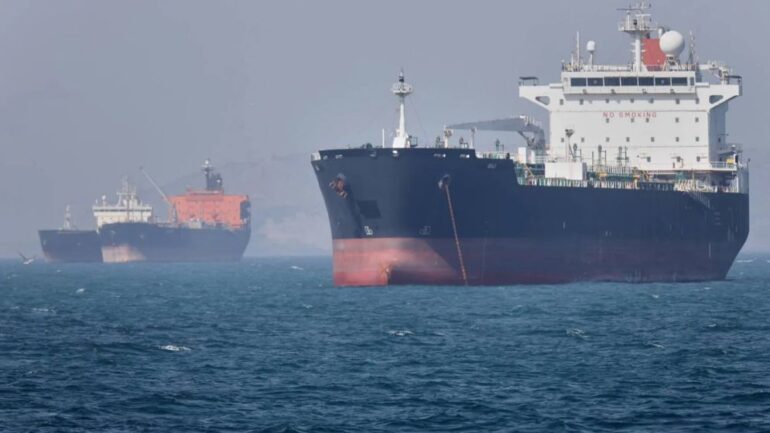
The scramble for more talks came after Iran and the United States traded fire over the strategic Strait of Hormuz, while US ally the United Arab Emirates reported Iranian attacks for the first time since the truce was declared nearly a month ago.
Diplomacy between Washington and Tehran has been deadlocked since the ceasefire, with the United States twice aborting plans for senior officials to attend talks in Pakistan.
Tehran has vowed not to surrender control over the Strait of Hormuz — the narrow waterway through which one-fifth of the world’s oil flowed before the United States and Israel attacked Iran on February 28.
German Chancellor Friedrich Merz implored Tehran to “return to the negotiating table and stop holding the region and the world hostage”, echoing calls from French President Emmanuel Macron and British Prime Minister Keir Starmer.
Saudi Arabia, a key US ally whose energy infrastructure has been hit by Iran, joined the calls on Tuesday to de-escalate and called for “diplomatic efforts to reach a political solution”.
The United States on Monday said its forces had sunk at least six small Iranian ships, but the Islamic republic denied any combat vessels had been hit and accused Washington of killing five civilians on boats.
Dangerous escalation’
The UAE — a close US ally and key Arab partner of Israel — said it was targeted by a barrage of missiles and drones from Iran, calling the attacks “a dangerous escalation and an unacceptable transgression”.
A strike targeting an energy installation in the emirate of Fujairah injured three Indian nationals, UAE authorities said.
They said four cruise missiles were launched, with three successfully shot down and another falling into the sea.
Iran also fired drones at a tanker affiliated with the UAE’s state-owned oil giant ADNOC, authorities said.
A senior Iranian military official did not deny the strikes but said the Islamic republic had “no pre-planned programme to attack the oil facilities in question”.
“What happened was the product of the US military’s adventurism to create a passage for ships to illegally pass through” the Strait of Hormuz, the official said, according to state television.
“The US military must be held accountable for it.”
Iranian Foreign Minister Abbas Araghchi — seen as a moderate in the cleric-run state — said the clashes showed there was “no military solution to a political crisis” and pointed to Pakistan’s efforts to keep mediating.
“The US should be wary of being dragged back into quagmire by ill-wishers. So should the UAE. Project Freedom is Project Deadlock,” he wrote on X.